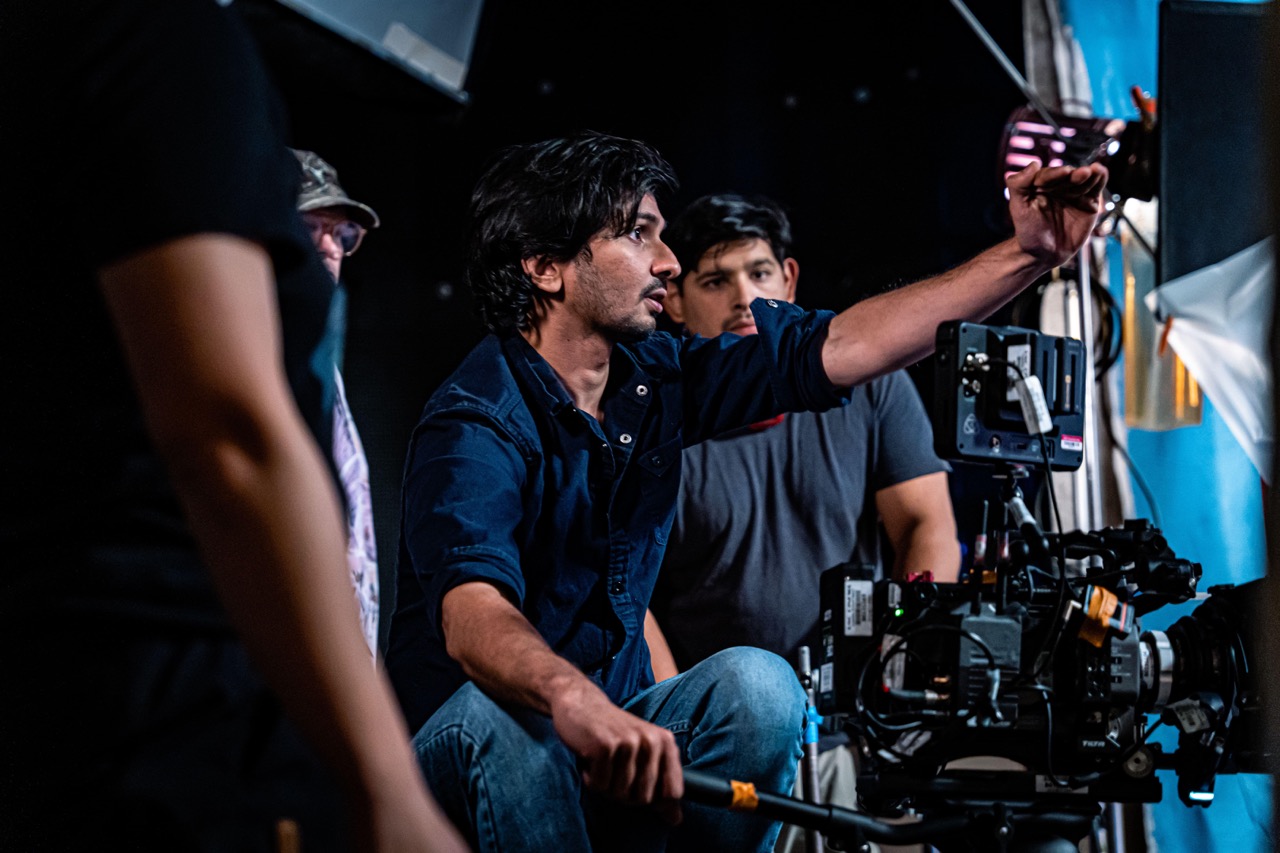
I'm a cinematographer based in Los Angeles, working in independent film, music videos, and commercials. My journey began in the slums of Mumbai, living two lives at once. By day, I was surrounded by well-dressed kids at a good school; by evening, I was back in our 10x10 room in the chawl. My parents, who saw TV as a distraction from education and survival, kept me from films.
Years later, I was working any job I could find to pull my family out of poverty. I was studying engineering because it seemed like the fastest way out. Then I took a gap year to earn tuition money and ended up at a PR agency. When the video editor got fired, I asked if I could try cutting footage. My boss must have seen something, because one day he dropped a camera bag on my desk and told me we were going somewhere.
The next thing I knew, I was sitting across from Kailash Kher, one of India's biggest singers. My boss told me to frame up the shot. I didn't even know how to switch the camera to video mode. I excused myself to the bathroom, Googled it, came back, and shot the interview. Something in that moment connected — Kailash Kher called me later and offered me a job. I spent the next years traveling with him across India, capturing his shows, his world.
It was survival, but it was also disorienting. One night I'd sleep on the floor of our chawl, the next in a five-star suite. The soft bed didn't feel real. I was seeing India's beauty — its landscapes, cultures, luxury — while we were still stuck in the slums. I was living in constant tension between two realities, never sure which one was true.
Eventually, I produced and directed commercials and music videos, working with brands like Brand Factory and Häfele India. I got my family out of the slums. I was successful. But I kept returning to the camera, to light. That was where I felt at home.
Still, I doubted myself. I'd never dreamed of being a filmmaker — I'd barely watched films. So I applied to USC. Not because I was sure, but because I thought maybe if a school like that accepted me, it would prove I belonged. They did. I went. And I chose cinematography.
At USC, I felt like an outsider again. Everyone around me had grown up eating, sleeping, breathing cinema. I hadn't. But my mentors helped me see that my life experience — the contrasts, the disorientation, the question of what's real — was my voice. I didn't need to copy what I'd seen in other films. I needed to see with the eyes I already had.
Now, when I read a script, I look for emotional truth. I look for characters who feel real, who carry the kind of richness I knew in the slums — the vibrance in darkness, the generosity in scarcity, the celebrations in hardship. If the characters don't speak to me, I don't have anything to bring to the story.
My work reflects the tension I've lived. In Open House, a rom-com thriller, I used naturalistic lighting to create a world where the cinematography disappears and the story breathes. In Dead Pet Shark, a fable about a boy trying to bring a dead shark back to life, I leaned into saturated colors and dreamlike compositions — a visual language closer to a storybook than reality.
I'm drawn to stories that provoke feelings, that make audiences cry, that linger long after the credits roll. I want my images to be heartfelt and emotionally evocative — not because I'm chasing a style, but because I know what it's like to feel two truths at once, to live in the space between what's real and what isn't.
That's where I work. That's where I see.


